
Some places on Mount Etna reveal the extraordinary scale of the volcano in a single glance. Valle del Bove is certainly one of them: an enormous natural depression on the mountain's eastern slope, surrounded by imposing cliffs and covered by vast expanses of lava.
The landscape is remarkable. Dark volcanic rocks, traces of past eruptions and the outlines of ancient volcanic formations create scenery completely different from the forests and villages found at lower elevations.
Valle del Bove is also one of the most important places for understanding Mount Etna's geological history. Its formation is connected with major collapses of the volcano's eastern flank and subsequent processes that transformed the landscape.
Travellers wishing to discover Valle del Bove on Mount Etna can admire it from several viewpoints, choosing an experience according to their fitness, mountain conditions and available time.
In this guide, we explore where the valley is located, how it was formed, which views make it so special and what to know before planning a visit.
Where is Valle del Bove?
Valle del Bove is located on Mount Etna's eastern slope, within the territory of Etna Regional Park.
It is an enormous horseshoe-shaped depression, measuring approximately seven kilometres by four and a half kilometres.
Its scale is difficult to appreciate from a photograph. From a panoramic viewpoint, however, visitors can understand the vastness of the valley, the height of its walls and the succession of lava flows covering its floor.
Its position makes Valle del Bove a defining feature of eastern Mount Etna, but it should not be confused with an ordinary valley that can be explored freely.
The environment is predominantly volcanic and mountainous. Visiting therefore requires careful selection of viewpoints and permitted walking routes.
For more information about Mount Etna's other attractions, read: Mount Etna: What to See among Craters, Volcanic Landscapes and Villages.
How was Valle del Bove formed?
Valle del Bove is one of Mount Etna's most interesting geological formations.
Its origins are connected with major instability and collapse events affecting the eastern flank of the volcanic structure, followed by erosion and subsequent eruptions.
The depression was therefore not created by a single eruption or the formation of an ordinary volcanic crater.
According to research by the Italian National Institute of Geophysics and Volcanology (INGV), the formation of the valley is connected with a succession of important geological events during the Holocene.
Studies of deposits found around Milo have helped researchers reconstruct the early stages of this major collapse.
Observing Valle del Bove therefore means looking at part of Mount Etna's geological history, revealed by the transformation of its eastern slope.
Why is Valle del Bove so spectacular?
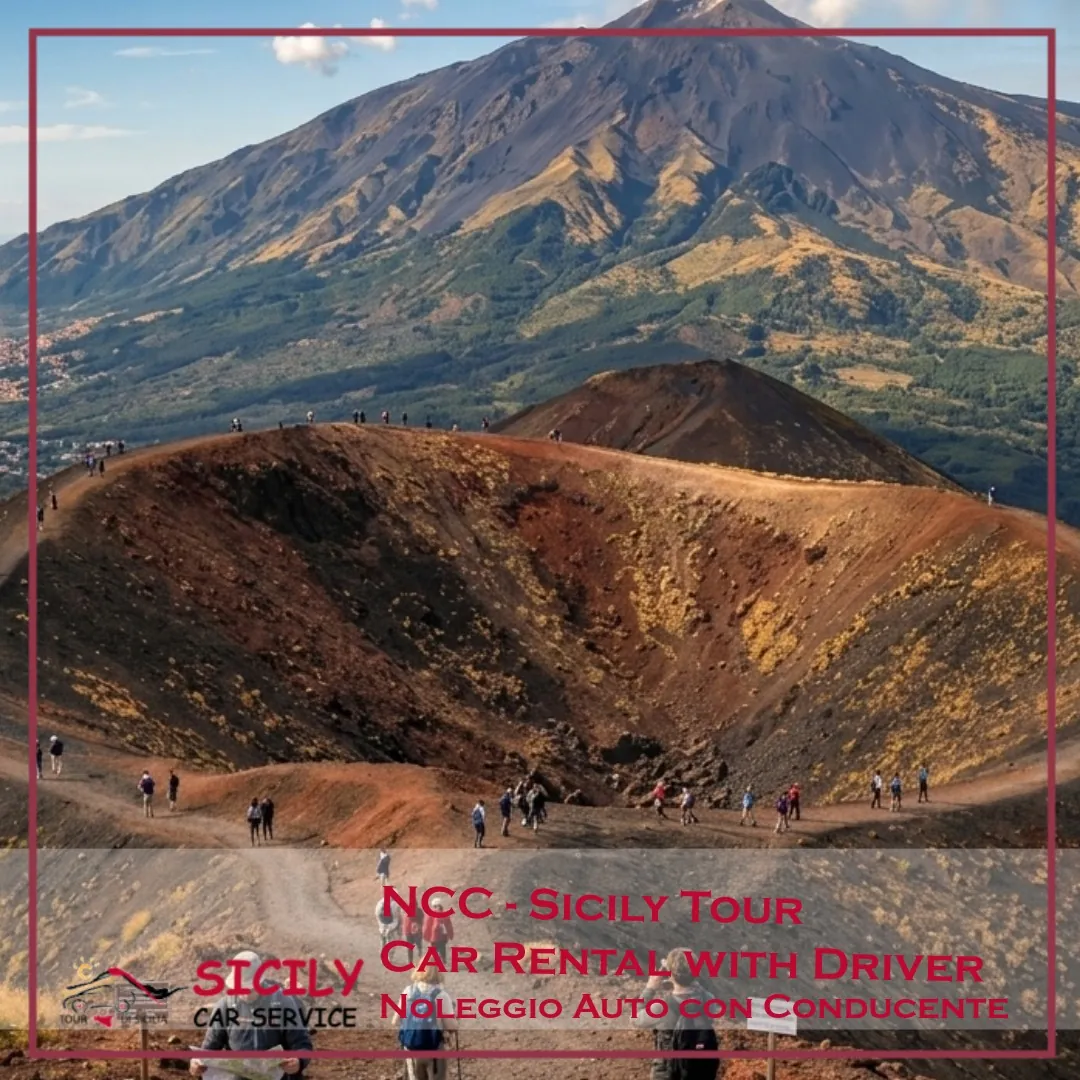
One of the valley's most striking characteristics is the combination of its enormous size and the towering walls surrounding it.
The floor is covered by lava flows that have accumulated over time, creating a landscape of dark surfaces, irregular formations and traces of different volcanic eruptions.
The cliffs reveal geological structures and layers of rock that help explain the different stages in the volcano's development.
Under certain lighting conditions, the differences between individual lava surfaces become particularly visible.
The scenery changes constantly with shadows, clouds and visibility, making every observation a slightly different experience.
The lava flows of Valle del Bove
Valle del Bove is closely connected with the history of Mount Etna's flank eruptions.
Numerous lava flows have entered the depression during different periods of volcanic activity, leaving traces that remain visible today.
One particularly significant historic event was the 1991–1993 eruption, one of Mount Etna's longest-lasting eruptions in recent history, which affected the volcano's eastern sector.
The valley floor illustrates how lava from different periods can overlap and progressively reshape the terrain.
From a panoramic viewpoint, visitors can appreciate these processes on a much larger scale than by examining a single piece of volcanic rock.
Valle del Bove is therefore an important location for the scientific study and monitoring of Mount Etna.
Where to see Valle del Bove: the best viewpoints
One of the most frequently asked questions is where to see Valle del Bove.
Several observation points are located along the edges of the depression, but not all are reached by easy walks, and none should be assumed accessible in every condition.
Excursions should be selected according to the actual difficulty of the route, weather conditions and official access regulations.
Schiena dell'Asino: one of the best-known viewpoints
Schiena dell'Asino is one of the best-known hiking routes for admiring Valle del Bove from above.
Its name, meaning "Donkey's Back", refers to the distinctive shape of the ridge.
The traditional route is accessed from Mount Etna's southern sector, near the road leading towards Rifugio Sapienza.
The landscape changes gradually during the ascent. Walkers pass through sections of mountain vegetation and volcanic terrain before reaching a panoramic area overlooking the depression.
From here, it is possible to appreciate the extraordinary size of Valle del Bove and the succession of lava flows covering its floor.
Important: Schiena dell'Asino is a hiking route, not a roadside viewpoint accessible directly by car. Some sections involve uphill walking and loose ground. The difficulty and duration depend on the exact route taken.
Monte Zoccolaro: another panoramic location
Another mountain known for its views over Valle del Bove is Monte Zoccolaro, on Mount Etna's eastern slope.
The surrounding area offers mountain scenery where vegetation alternates with views across the great volcanic depression.
Reaching its viewpoints may also require walking along mountain trails.
Travellers should therefore distinguish between reaching a trail starting point by car and reaching the viewpoint itself.
Before choosing this route, check its difficulty, current conditions and any restrictions.
Views from trails on the eastern slope
Other nature trails on eastern Mount Etna provide views of different sections of Valle del Bove.
The scenery varies considerably according to altitude and location.
Some viewpoints emphasise the enormous lava-covered floor, while others reveal the surrounding cliffs and geological formations more clearly.
For route selection, it is advisable to consult up-to-date official information and, where appropriate, qualified hiking or mountain professionals.
Schiena dell'Asino: what to know before hiking
Schiena dell'Asino is popular with walkers, but it should not be underestimated.
The traditional route includes uphill sections and volcanic surfaces that can make walking more demanding than the distance on a map might suggest.
When planning the excursion, consider:
- the actual length of the chosen route;
- elevation gain and uphill difficulty;
- ground conditions and loose volcanic sand;
- wind and visibility;
- temperatures at the trail's elevation;
- the participants' hiking experience;
- any closures or access requirements.
Visitors should avoid approaching unstable valley edges or leaving permitted routes in search of more dramatic photographs.
Safety must always come before finding the perfect viewpoint.
Can you reach Valle del Bove by car?
Valle del Bove is not a destination that can be reached directly by car in the same way as a town square or historic monument.
Some areas of Mount Etna that serve as starting points for panoramic trails can be reached by road, but the principal viewpoints often require walking.
This distinction is particularly important for families with young children, visitors with limited mobility and travellers who prefer not to hike.
In these cases, choosing other accessible panoramic areas on the volcano may be more appropriate, although they should not be considered equivalent to looking directly down into Valle del Bove.
For a visit focused on the volcanic landscapes of Etna South, read: Silvestri Craters and Rifugio Sapienza: What to See on Etna South.
Is Valle del Bove suitable for children?
The answer depends on the chosen route and the children's ages.
Discovering volcanic landscapes and panoramic views can be fascinating for families, but trails leading towards the edges of Valle del Bove may present difficulties unsuitable for younger children.
Uphill sections, gravel, volcanic sand, strong winds and changes in elevation all require attention.
For young children or those who are not accustomed to mountain walking, it is generally preferable to choose less demanding visitor areas and leave hiking routes for a time when they have the appropriate age and experience.
For more advice on family visits to the volcano, read: Mount Etna with Kids: What to See and Tips for Families.
Valle del Bove and landscape photography
For photography enthusiasts, Valle del Bove is one of Mount Etna's most extraordinary landscapes.
Its immense size provides opportunities to capture the scale of the volcano and the contrast between towering rock walls and extensive lava fields.
Atmospheric conditions play an essential role.
On clear days, the shapes of the valley are more easily distinguished, while cloud and mist can considerably reduce visibility.
Low-angle sunlight can highlight relief and differences between volcanic surfaces, although the best time of day also depends on the position of the chosen viewpoint.
Visitors should never extend a walk into darkness without proper preparation or approach exposed locations in search of a photograph.
When is the best time to visit Valle del Bove?
The experience changes with the seasons, mainly because of mountain weather conditions.
Spring
During spring, higher areas may still experience snow, strong winds and low temperatures.
Trail conditions should be checked before planning a hike.
Summer
Summer's generally longer days can favour hiking, although sun exposure and wind require preparation.
Carry drinking water, sun protection and layered clothing.
Autumn
Autumn may bring attractive colours to the vegetated areas of the volcano and create particularly atmospheric scenery.
However, the weather can change quickly.
Winter
During winter, snow, ice and poor visibility can make routes extremely demanding or inaccessible.
Mountain excursions should not be attempted without suitable preparation and equipment.
What to wear for a panoramic hike
Appropriate mountain clothing is essential when walking to hiking viewpoints.
Useful items include:
- hiking boots or shoes with good grip;
- comfortable walking trousers;
- layered clothing;
- a windproof and waterproof jacket;
- enough drinking water for the planned route;
- sun protection;
- a fully charged phone and suitable navigation equipment;
- additional specialist equipment when required by seasonal conditions.
Volcanic terrain can be tiring even for people accustomed to walking on conventional hiking trails.
Valle del Bove safety: what to check before visiting
Mount Etna is an active volcano, and access conditions can change.
Before planning a visit to Valle del Bove, check official information about volcanic activity, any access orders, weather conditions and trail accessibility.
In particular:
- never enter restricted areas;
- do not descend into the depression without an authorised route and appropriate preparation;
- keep away from unstable cliffs and edges;
- avoid hiking during strong winds or poor visibility;
- do not attempt unfamiliar routes without proper planning;
- use qualified guides where required or where the complexity of the route makes their assistance advisable.
The geological characteristics of Valle del Bove and Mount Etna's continuing activity make cautious and environmentally responsible behaviour essential.
A suggested itinerary for discovering Valle del Bove
For travellers wishing to admire Valle del Bove from a panoramic hiking route, a possible plan for the day might include:
- departure from your accommodation;
- transfer towards Mount Etna's southern sector;
- arrival at the starting point of the chosen route;
- checking trail conditions and equipment;
- a hike towards a permitted viewpoint, following the selected route;
- time to admire the landscape and photograph the valley;
- return along the planned trail;
- an optional stop in a Mount Etna village, if time and energy allow.
This is only a suggested outline. Walking times, routes and access possibilities must be determined according to actual conditions.
Valle del Bove, Zafferana Etnea and Milo: exploring the eastern slope
The geological history of Valle del Bove is also connected with the landscape of Mount Etna's eastern slope.
Geological research has identified important evidence of ancient collapse events in the Milo area.
For this reason, discovering Valle del Bove can be complemented by learning about the villages and landscapes of eastern Mount Etna, without necessarily trying to visit everything on the same day.
Among the places worth exploring are Zafferana Etnea and Milo, two towns that reveal the relationship between volcanic activity, agriculture and local communities.
Read more: Zafferana Etnea and Milo: What to See among Villages, Nature and Mount Etna Views.
Visiting Valle del Bove from Taormina
Travellers staying in Taormina can organise a day exploring Mount Etna's volcanic scenery, choosing a route towards the southern or eastern slope.
It is essential to distinguish the journey by road from any walking excursion.
To admire Valle del Bove from a hiking viewpoint, the total time required includes both the transfer to the trailhead and the actual walk.
The itinerary should be selected according to your interests, hiking experience and the conditions on the day.
For other excursion ideas from the Ionian Riviera, read: Tours from Taormina: the Best Private Excursions Without Stress.
Reaching the hiking areas with a private chauffeur
Organising a visit to Valle del Bove may require transport to mountain areas and the starting points of hiking routes.
For travellers who prefer not to drive, a private chauffeur service can make transfers to road-accessible locations more convenient.
Sicily Car Service, based in Taormina, organises private transfers and tailor-made itineraries throughout eastern Sicily, including accessible areas of Mount Etna.
Transport can be arranged according to your departure location, preferred timings and travel requirements.
It is important to clarify that a chauffeur-driven vehicle cannot reach hiking viewpoints that are not served by roads. Walking routes and guided hiking activities must be arranged separately with qualified operators where appropriate.
Careful planning helps distinguish the road journey from the hiking portion of the experience.
Why Valle del Bove deserves to be discovered
Valle del Bove on Mount Etna offers one of the most extraordinary perspectives on Sicily's famous volcano.
The vast depression, towering cliffs and overlapping lava flows tell a long story of geological transformation.
It is a landscape of exceptional scientific, natural and photographic interest, revealing the power of the processes that have shaped Mount Etna.
Its beauty, however, should be discovered responsibly, choosing viewpoints and routes appropriate for your abilities.
An extreme adventure is not necessary to appreciate the volcano. Understanding the landscape, observing its formations and discovering the history of Valle del Bove can already be a deeply rewarding way to explore Sicily.
Contact Sicily Car Service
Sicily Car Service
Via Arancio n. 29, Taormina (ME), Sicily, Italy
Phone: +39 333 160 6317 – +39 328 481 7474
Email: info@sicilycarservice.com
Office hours: Monday–Friday, 08:00–20:00, with 24/7 standby service.
Would you like to organise a day discovering Mount Etna's landscapes? Tell us your departure location, travel dates and number of passengers. We can help you arrange private transport to road-accessible areas, while any specialist hiking activities can be organised separately with qualified operators.
FAQ – Valle del Bove on Mount Etna
Where is Valle del Bove?
Valle del Bove is located on Mount Etna's eastern slope. It is a large horseshoe-shaped volcanic depression surrounded by imposing cliffs and covered by extensive lava flows.
How was Valle del Bove formed?
The valley formed through major collapses of Mount Etna's eastern flank, followed by erosion and subsequent eruptions. Its geological origins have been studied by the Italian National Institute of Geophysics and Volcanology.
What is the best-known viewpoint over Valle del Bove?
Schiena dell'Asino is one of the best-known viewpoints. It is reached by a hiking route that should only be attempted with suitable preparation and in favourable conditions.
Can you reach Valle del Bove by car?
Some trail starting points can be reached by road, but the main viewpoints usually require walking. A normal car transfer does not take visitors directly to the panoramic hiking viewpoints.
Is the Schiena dell'Asino trail difficult?
The trail includes uphill sections and volcanic terrain and is generally considered a moderately demanding hike. Visitors should check the exact route, trail conditions and their own fitness before setting out.
How big is Valle del Bove?
The depression measures approximately seven kilometres by four and a half kilometres and has a distinctive horseshoe shape.
Is Valle del Bove suitable for children?
It depends on the children's ages and the route. Some panoramic trails are demanding and may be unsuitable for young children or those without mountain walking experience.
When is the best time to visit Valle del Bove?
Conditions vary throughout the year. Always check the weather, visibility, trail accessibility and any restrictions related to volcanic activity before visiting.
Can you walk down into Valle del Bove?
Descending into the depression is not an ordinary tourist walk. It requires careful assessment of conditions, hiking abilities and access regulations. It should not be attempted independently without appropriate preparation.
Can you organise a visit to Valle del Bove from Taormina?
Yes. Private transport can be arranged to road-accessible starting areas. Any hike to panoramic viewpoints should be planned separately, using qualified guides where required.