Among the most fascinating and best-known places on Mount Etna's southern slope are the Silvestri Craters and Rifugio Sapienza, two important landmarks for travellers who want to discover volcanic landscapes without necessarily undertaking an excursion towards the mountain's summit.
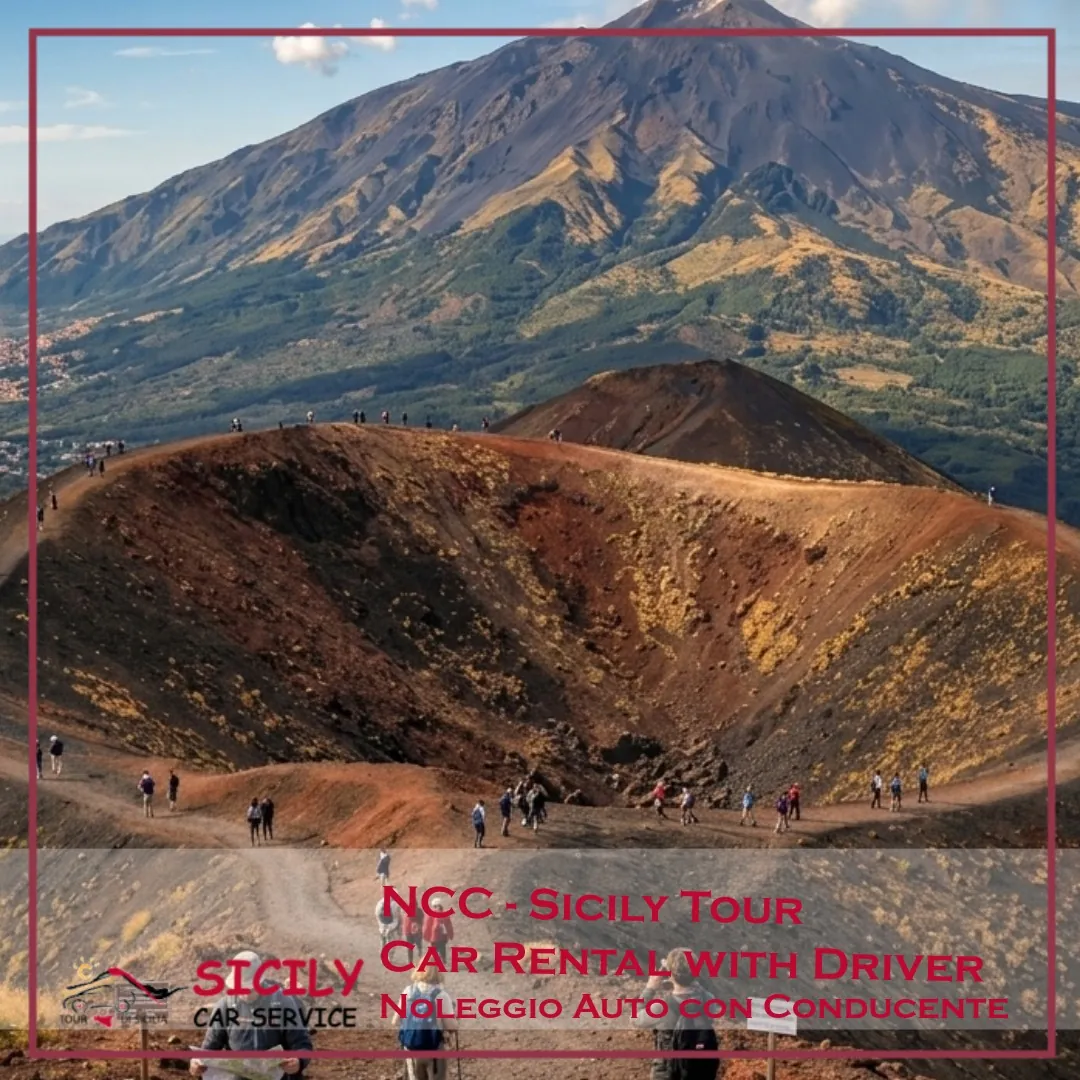
Here, at approximately 1,900 metres above sea level, Sicily reveals a completely different character from its beaches and coastal villages. The landscape is dominated by black volcanic sand, volcanic cones, reddish rocks, ancient lava flows and panoramic views that, on clear days, stretch towards Catania and the Ionian Sea.
The Silvestri Craters tell the story of an eruption that took place in 1892, while Rifugio Sapienza is one of the main visitor areas on the southern side of Mount Etna.
In this guide, we explore what to see at the Silvestri Craters, their geological history, the differences between the lower and upper craters and practical advice for organising a visit to the Rifugio Sapienza area.
Where are the Silvestri Craters?
The Silvestri Craters are located on Etna South, within the municipality of Nicolosi, near the road connecting the towns at the foot of the volcano with the Rifugio Sapienza area.
They are lateral volcanic cones situated at approximately 1,900 metres above sea level and formed during the eruption of 1892.
Their location close to the road and tourist facilities makes it possible to observe a remarkable volcanic environment without reaching Mount Etna's summit craters.
It is important to remember that Mount Etna is an active volcano. Accessibility, trail conditions and visiting opportunities may change depending on the weather, volcanic activity and restrictions issued by the relevant authorities.
To discover other interesting places on the volcano, read: Mount Etna: What to See among Craters, Volcanic Landscapes and Villages.
The history of the Silvestri Craters: the 1892 eruption
The formation of the Silvestri Craters is connected with one of Mount Etna's historic eruptions at the end of the nineteenth century.
On 9 July 1892, an eruptive fissure opened on the volcano's southern slope, forming several volcanic cones.
The eruption continued until 29 December of the same year, significantly changing the landscape through the accumulation of volcanic materials and the movement of lava flows.
The two principal cones were named after the volcanologist Orazio Silvestri, an important figure in the history of Sicilian volcanology and the scientific study of Mount Etna.
Today, the Silvestri Craters are inactive, but their shapes and volcanic deposits allow visitors to observe the consequences of that historic eruption.
A visit therefore provides an opportunity to discover a place of considerable geological and scientific interest.
The Lower Silvestri Crater
The Lower Silvestri Crater, known in Italian as Cratere Silvestri Inferiore, is one of the most recognisable features of the area.
Located close to the road, it has a distinctive circular depression surrounded by dark and reddish volcanic materials.
Its landscape makes the shape of the cone easy to recognise and provides an opportunity to observe the structure of a lateral volcanic crater.
It is particularly interesting for first-time visitors because it offers a close view of Mount Etna's volcanic features at an altitude accessible by road.
Despite its proximity to the visitor area, the ground can be uneven and slippery, especially where volcanic sand, gravel, wind or moisture affect the surface.
Anyone intending to follow a walking route should check local conditions and remain within permitted areas.
The Upper Silvestri Crater
The Upper Silvestri Crater, or Cratere Silvestri Superiore, is located at a higher elevation than the lower crater.
The surrounding environment features volcanic slopes, sand and rock fragments, with increasingly expansive views as the altitude rises.
Exploring this area generally requires more physical effort than simply observing the lower crater, as walking routes may involve uphill sections and loose volcanic ground.
The two craters should therefore not be considered equally easy to visit.
Before choosing a route, consider your fitness level, footwear, wind conditions, visibility and any restrictions.
Reaching the edge of the upper crater is not essential to appreciate the beauty of the surrounding landscape.
Why do the Silvestri Craters have such distinctive colours?
One of the most fascinating characteristics of the Silvestri Craters is the contrast between black and reddish volcanic surfaces.
These colours are related to the composition of volcanic materials and the changes they may undergo during and after an eruption.
Black sand, lapilli, rock fragments and reddish tones combine to create an environment that, in some respects, resembles a lunar landscape.
Along authorised walking routes, visitors may notice differences in the size of volcanic particles and the shapes of the surrounding surfaces.
This variety also makes the Silvestri Craters a particularly appealing destination for landscape photography.
What are Mount Etna's lateral craters?
Mount Etna has more than just its summit craters.
Throughout its history, numerous eruptions have originated from fissures opening along the mountain's flanks.
These openings can create lateral volcanic cones, formed by the accumulation of materials released during eruptions.
The Silvestri Craters are a particularly recognisable example of these formations.
Observing them helps visitors understand how Mount Etna has transformed its landscape even at considerable distances from the summit.
Rifugio Sapienza: the main visitor area on Etna South
Rifugio Sapienza, located at approximately 1,910 metres above sea level, is one of the principal visitor landmarks on Mount Etna's southern slope.
It is situated along the road climbing from Nicolosi and serves as an important access point for organised activities on Etna South.
The refuge and surrounding area are closely connected with the history of hiking and mountain tourism on Mount Etna.
Today, the area provides a base for travellers interested in exploring the volcano through panoramic walks, guided activities and observation of its extraordinary landscape.
Its position offers scenery very different from the lower elevations of eastern Sicily.
What to see around Rifugio Sapienza
Visiting the Rifugio Sapienza area does not necessarily involve demanding physical activities.
Even travellers who prefer to remain near the main visitor facilities can discover several interesting aspects of the volcanic landscape.
Ancient lava flows
Volcanic surfaces created by eruptions from different periods can be observed around Rifugio Sapienza.
Some areas feature dark, irregular rocks, while others show signs of vegetation gradually developing over time.
These landscapes provide a clear illustration of the role of volcanic activity in transforming the natural environment.
Panoramic views across eastern Sicily
When atmospheric conditions permit, the Rifugio Sapienza area offers views towards Catania, the Ionian coastline and the surrounding countryside.
The contrast between volcanic scenery in the foreground and populated areas in the distance is one of the most striking aspects of the visit.
The Mount Etna cable car
The Rifugio Sapienza area is also the starting point of the Funivia dell'Etna, the Mount Etna cable car, which provides access to higher areas of the southern slope.
Cable car operations, accessible elevations and available activities may change according to weather conditions, volcanic activity and safety regulations.
Travellers wishing to use the cable car or join an organised excursion should therefore check current operating conditions and booking arrangements directly with the operator.
How much time should you spend at the Silvestri Craters and Rifugio Sapienza?
The ideal duration depends on the type of visit.
A panoramic stop
Travellers who simply wish to observe the craters from accessible areas and photograph the landscape can plan a relatively short visit.
A visit lasting several hours
With more time available, visitors can explore permitted routes, observe different volcanic surfaces and appreciate the surrounding landscape at a relaxed pace.
Half a day on Etna South
A half-day visit allows more time to explore the Rifugio Sapienza and Silvestri Craters area, depending on journey times from your accommodation.
If you wish to use the cable car or take part in guided activities, allow additional time for those experiences.
Visiting the Silvestri Craters with children
The Silvestri Craters can also be interesting for families, but choosing an experience suitable for the children's ages is essential.
The area offers opportunities to observe volcanic landscapes without reaching Mount Etna's summit craters.
However, volcanic sand, gravel, wind and uphill sections can make some routes tiring.
With young children, short panoramic stops are generally preferable, and any walking route should be carefully assessed.
Trails on volcanic cones should not automatically be considered suitable for pushchairs.
For a guide specifically for families, read: Mount Etna with Kids: What to See and Tips for Families.
When is the best time to visit the Silvestri Craters?
The Silvestri Craters and Rifugio Sapienza area offer different experiences throughout the year.
Spring
During spring, the volcanic landscape may still experience cold weather and snow at higher elevations.
It is important to check trail and road conditions before visiting.
Summer
Generally longer daylight hours make summer suitable for panoramic visits.
However, strong winds can occur, and the volcanic terrain may be particularly exposed to sunshine. Bringing a warm layer is advisable even during summer.
Autumn
Autumn can offer striking landscapes, although weather conditions tend to become more changeable.
Check wind forecasts, rainfall and visibility before setting out.
Winter
During winter, snow, ice and low temperatures may affect the area.
Road and trail accessibility can change quickly. Under these conditions, it is essential to follow official advice and avoid attempting unsuitable routes.
What to wear when visiting the Silvestri Craters
The climate around Rifugio Sapienza is different from that of Sicily's coastal towns.
For a visit, consider bringing:
- closed shoes with good grip;
- comfortable trousers;
- layered clothing;
- a windproof jacket;
- a warm layer, even in summer;
- a hat and sun protection;
- drinking water;
- sunglasses;
- additional equipment appropriate for the season.
Volcanic ground can be unstable, so lightweight shoes with poor grip are not a good choice for walking routes.
Silvestri Craters: safety tips for your visit
Mount Etna is an active volcano, and safety must always take priority over sightseeing plans.
Although the Silvestri Craters are inactive volcanic cones, environmental conditions and temporary restrictions can affect visits.
It is important to:
- check weather conditions before departure;
- verify any official restrictions or access limitations;
- remain on permitted paths;
- avoid unstable crater edges and unauthorised slopes;
- avoid walking routes in poor visibility;
- postpone walks when strong winds or ground conditions make movement difficult;
- follow instructions from the authorities and qualified local operators.
Excursions to higher elevations are separate activities and may require qualified guides and specific access permissions.
How to reach Rifugio Sapienza
Rifugio Sapienza is located on Mount Etna's southern slope and is reached by the road network climbing from the Nicolosi area.
The journey passes through different landscapes, from inhabited and vegetated lower areas to increasingly volcanic scenery higher up the mountain.
Travelling times depend on the departure location, traffic, season and road conditions.
During periods of snow or adverse weather, traffic restrictions may apply.
Silvestri Craters and Rifugio Sapienza from Taormina
Travellers staying in Taormina can organise a day exploring Mount Etna's southern slope.
It is advisable to plan the route in advance, distinguishing the time needed to reach Rifugio Sapienza from the time actually available for sightseeing.
A good approach is to concentrate on the Silvestri Craters and surrounding volcanic landscapes rather than include too many distant destinations.
For more excursion ideas from the Ionian Riviera, read: Tours from Taormina: the Best Private Excursions Without Stress.
Combining Etna South with a visit to Zafferana Etnea
Travellers with a full day available may wish to include a traditional village in their itinerary.
Zafferana Etnea, on the eastern slope, is known for its honey production, food traditions and historical relationship with the volcano.
Whether it is practical to include the town depends on the chosen route, travelling times and number of planned stops.
To discover more about this area, read: Zafferana Etnea and Milo: What to See among Villages, Nature and Mount Etna Views.
Etna South or Etna North?
Rifugio Sapienza and the Silvestri Craters are located on Mount Etna's southern slope.
Travellers interested in the northern side can explore the Piano Provenzana area and the territory around Linguaglossa.
The two slopes offer different landscapes and are not connected by a road crossing the summit of the volcano.
For a visit lasting only a few hours, it is generally better to choose one side of the mountain.
Explore the differences in our guide: Etna North or Etna South: Which Side Should You Choose for Your Visit?.
Suggested itinerary to the Silvestri Craters
For travellers who want to spend a few hours exploring the volcanic landscape of Etna South, a suggested itinerary could include:
- departure from Taormina, Catania or another location in eastern Sicily;
- journey towards the Rifugio Sapienza area;
- a first panoramic stop to observe the landscape;
- a visit to the Lower Silvestri Crater, depending on access conditions;
- an optional, more demanding walk towards the Upper Silvestri Crater;
- observation of lava flows from permitted areas;
- a break in the main visitor area;
- return to your accommodation or continuation towards a village, if time allows.
This should not be considered a fixed programme. Weather conditions, accessibility and visitors' abilities may require changes.
Visiting the Silvestri Craters with a private chauffeur
The Rifugio Sapienza area is accessible by road, but organising a visit still requires consideration of timings, the season and mountain conditions.
For travellers who prefer not to drive, a private chauffeur service can make the journey from their accommodation to the Etna South visitor area easier.
Sicily Car Service, based in Taormina, organises private transfers and tailor-made itineraries across eastern Sicily, including Rifugio Sapienza and other road-accessible destinations around Mount Etna.
A personalised programme can be arranged according to your departure location, number of passengers and preferred stops.
Private transport does not replace qualified volcano or mountain guides for activities requiring their expertise. Specialist excursions and cable car tickets must be arranged separately.
Why visit the Silvestri Craters and Rifugio Sapienza?
The Silvestri Craters are among the most fascinating places to discover Mount Etna's geological history.
Their origins in the 1892 eruption allow visitors to observe evidence of an event that significantly transformed the volcano's southern slope.
Nearby Rifugio Sapienza provides an important starting point for discovering Etna South's landscapes, from lava fields to panoramic views across eastern Sicily.
It is an appealing destination for travellers interested in nature, photography, geology and places that reveal the continuous transformation of the natural world.
Reaching Mount Etna's summit is not necessary for a memorable experience. Simply observing an ancient crater and exploring permitted areas at a relaxed pace can reveal much of the mountain's extraordinary beauty.
Contact Sicily Car Service
Sicily Car Service
Via Arancio n. 29, Taormina (ME), Sicily, Italy
Phone: +39 333 160 6317 – +39 328 481 7474
Email: info@sicilycarservice.com
Office hours: Monday–Friday, 08:00–20:00, with 24/7 standby service.
Would you like to organise a visit to the Silvestri Craters and Rifugio Sapienza? Tell us your departure location, travel dates and number of passengers. We can help you arrange a private transfer or itinerary with realistic timings and panoramic stops, subject to current access conditions on Mount Etna.
FAQ – Silvestri Craters and Rifugio Sapienza
Where are the Silvestri Craters?
The Silvestri Craters are located on Etna South, near Rifugio Sapienza, at approximately 1,900 metres above sea level, within the municipality of Nicolosi.
How were the Silvestri Craters formed?
They formed during Mount Etna's 1892 eruption, which began on 9 July and ended on 29 December of the same year.
What is the difference between the Lower and Upper Silvestri Craters?
The Lower Silvestri Crater is closer to the road and is generally easier to observe. The Upper Silvestri Crater is at a higher elevation, and routes leading towards it can be more demanding.
Can you visit the Silvestri Craters without a guide?
Visits to permitted tourist areas and walking routes may be possible without a specialist guide, depending on current regulations. Excursions in regulated or high-altitude areas may require qualified guides.
How long does it take to visit the Silvestri Craters?
The time required depends on the route. A panoramic stop may be relatively short, while walking along permitted trails takes longer and requires consideration of the terrain.
Are the Silvestri Craters suitable for children?
They can be interesting for families if suitable routes are chosen. However, volcanic sand, gravel and slopes mean that children's ages and abilities must be carefully considered.
How high is Rifugio Sapienza?
Rifugio Sapienza is located at approximately 1,910 metres above sea level on Mount Etna's southern slope.
Can you reach Rifugio Sapienza by car?
Yes. It is normally accessible via the road network climbing from Nicolosi, although restrictions may apply because of snow, weather, road conditions or official orders.
Does the Mount Etna cable car depart from Rifugio Sapienza?
Yes. The Rifugio Sapienza area is the starting point for the Funivia dell'Etna cable car. Services, accessible elevations and operating conditions should be confirmed directly with the operator.
Can you visit the Silvestri Craters and Rifugio Sapienza from Taormina?
Yes. Travellers staying in Taormina can organise an itinerary to Etna South, choosing the programme according to available time and current access conditions.