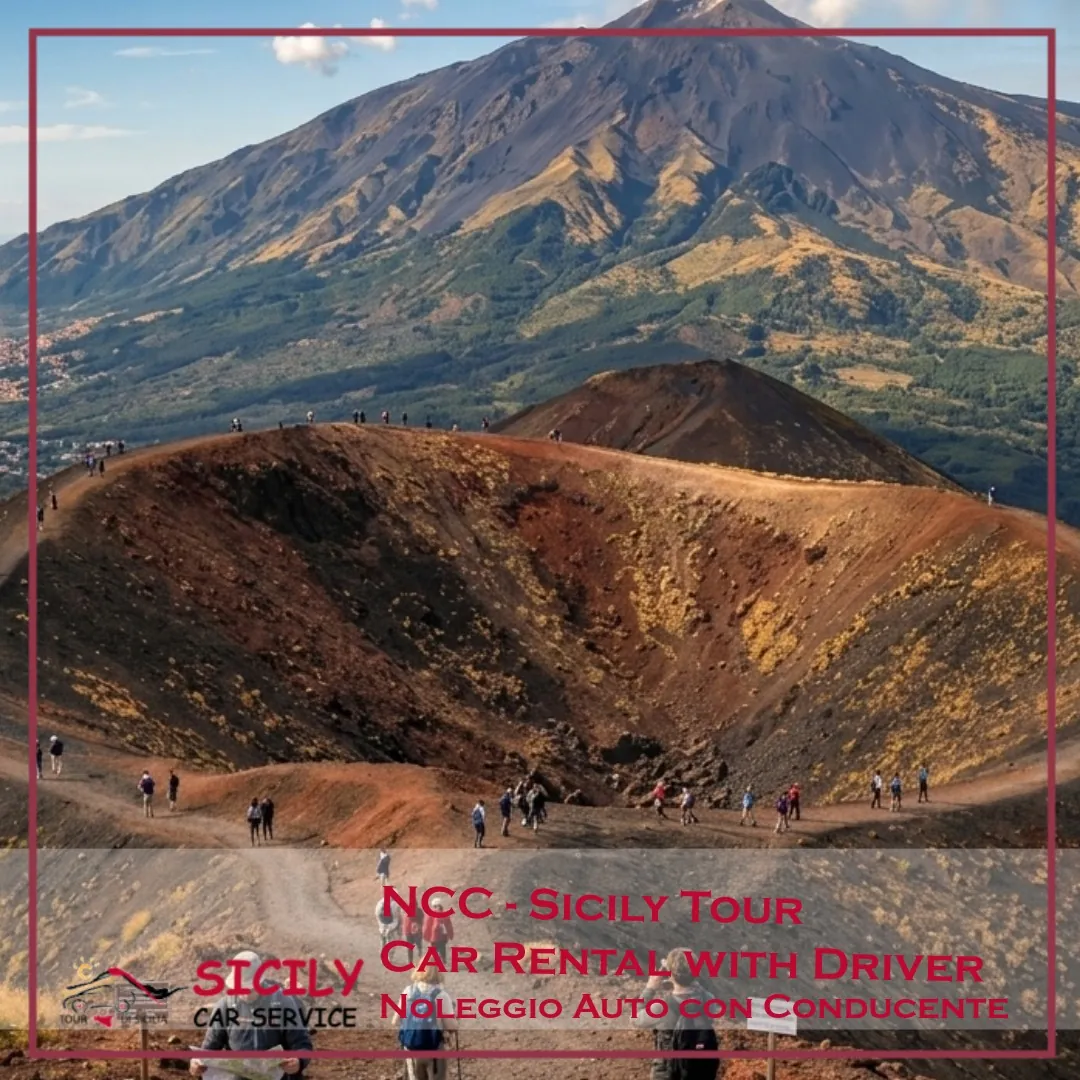

On the slopes of Mount Etna, where lava flows have shaped the mountain over centuries, lies one of Sicily's most fascinating wine landscapes. Here, among stone terraces, traditional villages, forests and old vineyards, a remarkable winemaking culture has developed in close connection with the volcano.
Visiting Mount Etna wineries is about much more than discovering wines and enjoying tastings. It is an opportunity to explore a region where nature, agriculture and culture come together, creating landscapes very different from those found along Sicily's coastline.
Vineyards extend across several sides of the volcano, at different elevations and with varying exposures. Climate, soil characteristics and village traditions change from one area to another, making an itinerary dedicated to Etna wines particularly interesting.
In this guide, we explore what to see around Mount Etna's wineries and vineyards, the most interesting wine-producing areas, the region's traditional grape varieties and how to organise a day combining volcanic landscapes, villages and food and wine experiences.
Mount Etna: a mountain of lava, vineyards and ancient traditions
Mount Etna is known worldwide for its volcanic activity, craters and spectacular lava landscapes. Yet the mountain is also home to an agricultural region of exceptional interest.
Across many of its slopes, generations of farmers have cultivated vines by adapting to uneven terrain, steep gradients and changing climatic conditions.
The vineyards tell the story of this relationship between people and the natural environment. In some areas, visitors encounter neatly arranged rows of vines; elsewhere, ancient terraces are supported by traditional lava-stone walls.
The scenery changes constantly. One vineyard may be surrounded by dark volcanic surfaces, while another lies beside a forest or overlooks the Ionian Sea.
This variety makes the Etna region especially appealing to travellers interested in nature, landscapes, agricultural history and wine.
For an introduction to the volcano's main attractions, read: Mount Etna: What to See among Craters, Volcanic Landscapes and Villages.
Why are Mount Etna vineyards so distinctive?
The character of Etna's vineyards is influenced by several factors: volcanic soils, altitude, exposure to sunlight, wind and climatic differences between the mountain's slopes.
The soil is not uniform. Different eruptions have created surfaces with varying characteristics, where agricultural activities and settlements have developed over time.
Altitude also influences vine cultivation. Differences between daytime and night-time temperatures, together with local climatic conditions, help distinguish the various wine-producing areas.
Another characteristic feature is the presence of ancient terraces, created to make sections of the mountain slopes suitable for cultivation.
These walls, often built from lava stone, are evidence of the work carried out by generations of winegrowers.
Heroic viticulture on the slopes of the volcano
In certain parts of Mount Etna, cultivating vines requires particularly demanding work.
Steep slopes, terraced land, rocky soils and small plots can make the use of agricultural machinery difficult.
For this reason, Etna winegrowing is often associated with the concept of heroic viticulture, a term describing the effort required to cultivate vines in challenging environments.
During a winery visit, learning about these conditions helps visitors understand the relationship between the landscape and wine production.
A bottle of wine becomes not merely the result of processing grapes, but also an expression of the agricultural history of a volcanic region.
Etna DOC: wines from the volcano
The Etna DOC designation is one of the defining features of the region's winemaking identity.
Established in 1968, it was Sicily's first Denominazione di Origine Controllata, or Controlled Designation of Origin.
Its production regulations define the geographical areas, permitted wine styles, authorised grape varieties and requirements that wines must meet.
The designated territory includes areas on several slopes of Mount Etna and is home to producers with different histories, sizes and winemaking approaches.
Etna Rosso DOC
Etna Rosso DOC is one of the region's best-known wines.
Its principal grape variety is Nerello Mascalese, traditionally accompanied by Nerello Cappuccio in proportions permitted by the production regulations.
The wines can vary considerably depending on their area of origin, the producer's choices and the vintage.
Etna Bianco DOC
Etna Bianco DOC is closely associated with Carricante, one of the most representative grape varieties grown on Mount Etna.
Different production areas can produce distinctive interpretations, influenced by soil, exposure and the techniques used in the winery.
Etna Bianco Superiore DOC
Special attention should be given to Etna Bianco Superiore DOC, associated with the specific production area defined by the regulations within the territory of Milo.
This distinction makes Milo a particularly interesting destination for travellers wishing to learn more about Mount Etna's white wine traditions.
Etna Rosato and sparkling wines
The region also produces other wine styles permitted under the designation, including rosé and sparkling wines.
Visiting a producer can provide an opportunity to discover these different expressions of Etna DOC and their relationship with traditional grape varieties.
Mount Etna's contrade: small areas with distinctive characteristics
An important element of Etna wine culture is the concept of a contrada.
Contrade are specific geographical areas that may differ in location, elevation, exposure and geological characteristics.
In winemaking, identifying a particular contrada helps describe the origin of the grapes and the landscape in which they are grown.
During a wine tourism experience, learning about these areas can be especially interesting because it illustrates how the volcano's geography influences agriculture.
Any geographical indications used on wine labels must comply with the regulations governing the designation.
Where to visit Mount Etna wineries
Wineries are distributed across different parts of the volcano. Before choosing where to visit, it is useful to understand the characteristics of the main wine-producing slopes.
Etna North: Linguaglossa, Solicchiata and Passopisciaro
The northern slope is home to an important part of Mount Etna's wine landscape.
Among the best-known localities are Linguaglossa, Solicchiata and Passopisciaro, together with the surrounding countryside.
Visitors can discover vineyards, lava flows, historic agricultural estates and landscapes overlooking the northern side of the volcano.
Nerello Mascalese is particularly representative of the area's winemaking heritage.
For travellers who enjoy combining wine and culture, visits to these vineyard areas can be paired with time in Linguaglossa or Randazzo.
Read more: Linguaglossa and Randazzo: What to See among Historic Villages and Mount Etna's Natural Beauty.
Etna East: Milo and vineyards overlooking the Ionian Sea
The eastern slope offers a different landscape, influenced more strongly by winds and moisture arriving from the sea.
Milo is one of the most representative towns in this area and is closely connected with the production of Etna Bianco Superiore DOC.
Vineyards and forests create a green landscape, with views that extend towards the Ionian coastline on clear days.
A winery visit in this area can be combined with a walk through Milo or Zafferana Etnea, allowing travellers to discover the villages of the eastern slope.
Explore: Zafferana Etnea and Milo: What to See among Villages, Nature and Mount Etna Views.
Etna South-East: vineyards, villages and volcanic landscapes
The south-eastern slope includes areas where vineyards coexist with agricultural landscapes, traditional settlements and evidence of past volcanic activity.
Differences in exposure and altitude contribute to the region's diversity.
This part of Mount Etna is interesting for travellers who want to discover the vineyards and understand how the volcanic landscape changes towards areas closer to the coast.
Etna South-West: a different agricultural environment
The south-western slope has climatic and landscape characteristics that differ from those of the eastern side.
Greater distance from the sea, exposure and temperature variations contribute to distinctive conditions for growing vines.
Here too, the agricultural landscape reflects the relationship between local communities, volcanic soils and traditional production methods.
What to expect during a Mount Etna winery visit
Experiences offered by wineries vary. Some producers organise vineyard tours and introductions to winemaking, while others offer guided tastings or food pairings.
Always check which activities are available and whether advance booking is required.
Walking through the vineyards
A visit may begin with a walk among the vines, where included in the winery's programme.
This provides an opportunity to observe the plants, terraces, lava-stone walls and surrounding scenery.
Discovering the winery's history
Many producers maintain strong connections with their family history and the surrounding countryside.
Learning about an estate's origins and agricultural traditions can add depth to the visit.
Understanding wine production
Where included in the experience, visitors can learn about the main stages of winemaking and ageing.
Facilities and techniques can differ considerably between historic wineries and more modern establishments.
Guided wine tasting
For participants of legal drinking age, a tasting may include explanations of grape varieties, production areas and the characteristics of different wines.
Travellers who do not drink alcohol can ask whether alternatives are offered, such as vineyard visits or tastings of local food products.
The landscape of Mount Etna's traditional palmenti
One of the most interesting aspects of Etna's winemaking history is the presence of traditional palmenti.
These structures were historically used for the initial stages of grape processing and demonstrate the importance of viticulture in the region.
Some agricultural estates still preserve historic buildings connected with this tradition.
Their presence reveals how wine was an integral part of the economic and social lives of Etna's communities long before contemporary wine tourism developed.
When is the best time to visit Mount Etna vineyards?
The vineyards change appearance throughout the year, and each season reveals different aspects of the landscape.
Spring
In spring, vegetation gradually begins a new growing cycle. Agricultural landscapes become greener, and temperatures can be pleasant for outdoor visits.
Summer
During summer, generally longer days allow for panoramic visits, although strong sunshine and warm temperatures should be considered.
Choose suitable times, carry drinking water and use sun protection.
Autumn and the grape harvest
Autumn is a particularly important season for the region's vineyards.
The grape harvest on Mount Etna varies according to altitude, weather conditions and grape variety. In some areas, harvesting can take place later than in other parts of Sicily.
Harvesting and winemaking are busy periods for producers, and not every winery offers visits during these operations.
If you would like to learn about the harvest, check in advance whether special experiences are available.
Winter
In winter, vineyards enter a different stage of their growing cycle, while the volcano's higher elevations may be covered in snow.
Some wineries offer visits during the colder months, but availability and accessibility should always be confirmed beforehand.
How to organise a day exploring Mount Etna wineries
To discover the wine region at a relaxed pace, it is advisable to concentrate on one specific area of the volcano.
Trying to visit wineries on widely separated slopes in a single day can mean long journeys and less time to enjoy the experience.
A well-planned itinerary might combine:
- a panoramic area of Mount Etna;
- a traditional village;
- a pre-booked winery visit;
- a lunch break;
- optional photographic stops along the route.
The programme should take winery opening times, visit duration and road conditions into account.
Suggested itinerary: Etna North and its wine region
Travellers interested in the northern slope can organise a day around Linguaglossa and the surrounding vineyards.
A suggested itinerary could include:
- departure from Taormina or another location in eastern Sicily;
- arrival in Linguaglossa;
- a short walk through the historic centre;
- transfer to a winery on the northern slope;
- a pre-booked visit to the vineyards and estate;
- an optional tasting for participants of legal drinking age;
- a local food stop;
- an optional visit to Randazzo, if time allows;
- return to your accommodation.
This is a suggested programme and should be adapted to winery availability and actual travelling times.
Suggested itinerary: Milo, Zafferana and eastern Etna wines
Another appealing option is to dedicate the day to Mount Etna's eastern slope.
An itinerary could include:
- departure from your accommodation;
- arrival in Zafferana Etnea;
- a walk through the town and discovery of local products;
- transfer towards Milo;
- a panoramic stop overlooking the Ionian coastline;
- a pre-booked visit to a local winery;
- an optional gastronomic experience;
- return to your accommodation.
This route is ideal for travellers who want to combine vineyard scenery with visits to traditional villages on the eastern side of Mount Etna.
Mount Etna wineries: practical tips before visiting
Before organising a wine tourism experience, consider a few practical details.
- Booking: not all wineries accept visitors without an appointment.
- Duration: experiences may include a simple visit or several activities.
- Language: check whether guided visits are available in English or your preferred language.
- Accessibility: vineyards, terraces and historic buildings may have uneven ground or steps.
- Children: ask whether family-friendly activities are available.
- Dietary requirements: communicate allergies or dietary needs in advance.
- Transport: if you intend to drink wine, arrange transport so that you do not need to drive.
Wine country can also be enjoyable for travellers who do not consume alcohol, particularly through experiences focused on nature, agricultural history and landscapes.
Visiting Mount Etna wineries from Taormina
Taormina is a convenient starting point for exploring several of Mount Etna's wine-producing areas.
The route will depend on the slope you wish to visit and the winery you choose.
For travellers staying on the Ionian Riviera, it is generally advisable to explore one area of the volcano, possibly combining the winery visit with a traditional village or panoramic stop.
For other excursions from the area, read: Tours from Taormina: the Best Private Excursions Without Stress.
Discovering Mount Etna vineyards and wineries with a private chauffeur
Mount Etna's vineyards and wineries extend across a large region, with roads connecting villages, agricultural areas and different sides of the mountain.
For travellers who prefer not to drive, a private chauffeur service can make journeys between road-accessible destinations easier to organise.
Sicily Car Service, based in Taormina, organises private transfers and tailor-made itineraries across eastern Sicily, including the villages and wine-producing areas surrounding Mount Etna.
A programme can be arranged according to your departure point, pre-booked winery experience and any additional stops you would like to include.
Guided winery visits, tastings and admission arrangements must be checked and agreed separately with the relevant producers.
This approach allows visitors to spend more time appreciating the landscape and the experience without having to manage driving and parking.
Why explore Mount Etna's vineyards and wineries?
Mount Etna's wine region tells a different but complementary story to that of the volcano's craters and eruptions.
Here, the volcano is part of everyday life. It has influenced the formation of agricultural soils, the organisation of vineyards, rural architecture and farming traditions.
Visiting a winery therefore offers an opportunity to discover not only wine, but also the work of local people and the history of the places they inhabit.
Among vine rows, lava-stone terraces, historic palmenti and traditional villages, Mount Etna reveals a landscape of considerable cultural and natural interest.
Whether you choose the northern slope, the eastern side or another wine-producing area, the best approach is to allow enough time to appreciate the surroundings rather than turning the day into a rushed sequence of stops.
Contact Sicily Car Service
Sicily Car Service
Via Arancio n. 29, Taormina (ME), Sicily, Italy
Phone: +39 333 160 6317 – +39 328 481 7474
Email: info@sicilycarservice.com
Office hours: Monday–Friday, 08:00–20:00, with 24/7 standby service.
Would you like to organise a day exploring Mount Etna's vineyards and villages? Tell us your departure location, travel dates, number of passengers and any winery you would like to visit. We can help you arrange a private itinerary with realistic timings, panoramic stops and comfortable transfers.
FAQ – Mount Etna Wineries and Vineyards
Where are Mount Etna wineries located?
Wineries are spread across several slopes of the volcano. Well-known wine-producing areas include Linguaglossa, Solicchiata, Passopisciaro, Randazzo and Milo, along with other locations within the Etna DOC region.
What wines are produced on Mount Etna?
Some of the most representative wines include Etna Rosso DOC, Etna Bianco DOC, Etna Bianco Superiore DOC and Etna Rosato DOC. The region also produces sparkling wines under the permitted designation categories.
What are the main grape varieties grown on Mount Etna?
Traditional grape varieties include Nerello Mascalese, Nerello Cappuccio and Carricante, used according to the production regulations for different wine styles.
Why are Mount Etna wines distinctive?
Vineyards grow in an environment influenced by volcanic soils, varying altitudes, different exposures and local climatic conditions. These factors contribute to the diversity of the region's wines.
Can you visit Mount Etna wineries?
Yes. Various producers offer vineyard visits, introductions to winemaking and wine tastings. Activities depend on the individual winery and generally require advance booking.
When is the best time to visit Mount Etna vineyards?
Spring and autumn are particularly attractive for the scenery. The grape harvest is an important period in the agricultural calendar, but winery activities and visitor availability should be confirmed in advance.
What is a contrada on Mount Etna?
A contrada is a specific geographical area that may have distinctive characteristics relating to altitude, exposure and soil. In winemaking, contrade help identify the geographical origin of grapes.
Can you combine Mount Etna and a winery visit in one day?
Yes. A day can include a village or panoramic viewpoint followed by a winery experience, provided you choose nearby locations and allow for booking times and travel.
Can you visit Mount Etna wineries with children?
It depends on the activities offered by each producer. Some wineries may provide vineyard visits or cultural experiences suitable for families. Alcoholic tastings are reserved for adults of legal drinking age.
Can you arrange a private Mount Etna winery itinerary from Taormina?
Yes. Sicily Car Service can organise private transport from Taormina to road-accessible wineries and villages around Mount Etna. Winery visits, admission and tastings must be arranged separately with the producers.